
Outdoor play gives young children the freedom to move, explore and learn through direct experience.
From splashing in water and collecting leaves to kicking a ball or helping in the garden, simple outdoor activities for toddlers can support physical development, communication, creativity, confidence and curiosity.
Outdoor activities do not need to be complicated. A garden, local park, woodland walk or small outdoor space can provide plenty of opportunities for learning.
The NHS recommends that toddlers and pre-school children spend at least 180 minutes being physically active throughout the day, making active outdoor play an important part of everyday life.
The activities children enjoy will naturally change as they grow. A one-year-old may enjoy touching grass and watching bubbles, while an older child may be ready for scavenger hunts, obstacle courses and simple games.
In this guide, we’ll explore 28 outdoor activities for children aged between one and five.
Your Guide To Outdoor Activities For Toddlers
Outdoor play gives children the chance to experience their surroundings in ways that are difficult to recreate indoors. They can feel different textures, hear new sounds, notice changes in the weather, practise moving their bodies and learn more about the natural world.
The Early Years Foundation Stage recognises physical development as one of the key areas of learning for children from birth to five. Government early years guidance also explains that indoor and outdoor play can help children develop core strength, balance, spatial awareness, co-ordination and agility.
Throughout this guide, we’ll look at:
- Outdoor activities for 1 year olds
- Outdoor activities for 2 year olds
- Outdoor activities for 3 year olds
- Outdoor activities for 3-5 year olds
Every child develops differently, so these age groups should be treated as a guide. Activities can always be adapted depending on what a child enjoys and is ready to do.
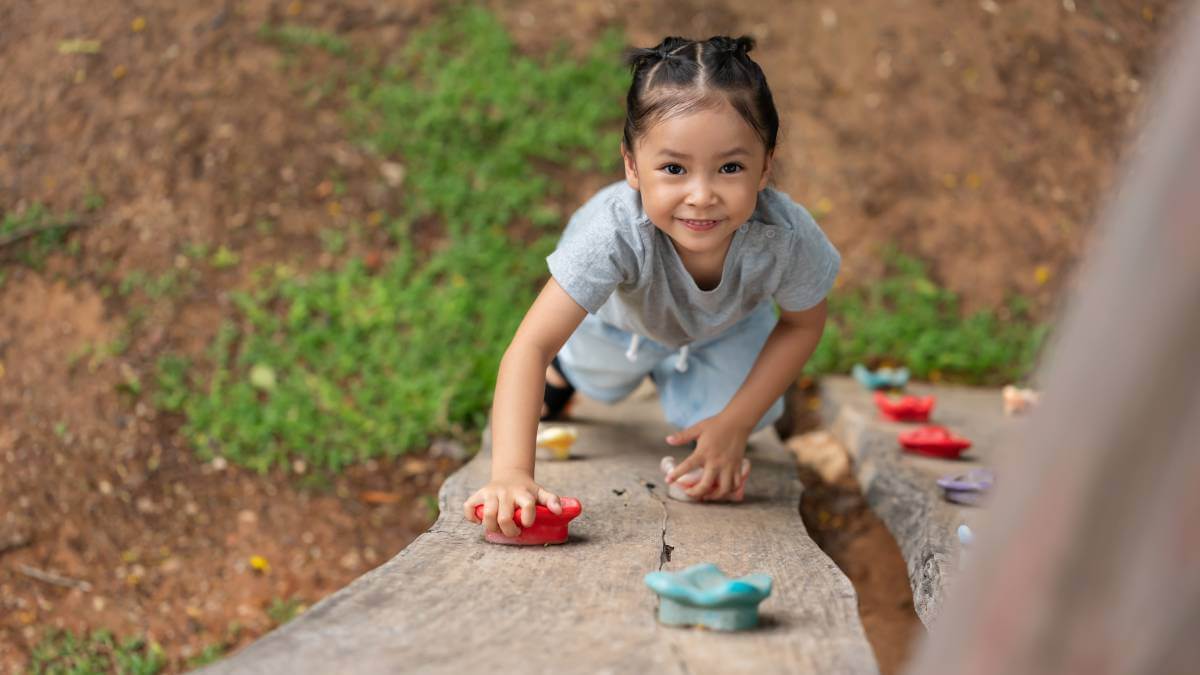
Outdoor Activities For 1 Year Olds
Around their first birthday, children are learning a huge amount about movement and the world around them.
Some may be walking independently, while others may still prefer to crawl or hold an adult’s hand. Outdoor activities at this age can focus on sensory exploration, simple movement, and cause-and-effect.
1. Explore A Sensory Garden
A garden can provide a naturally rich sensory environment. Children can touch grass, listen to leaves moving in the wind or smell safe herbs such as mint and rosemary. Adults can introduce simple words such as “soft”, “rough”, “green” and “smooth” while children explore. For more ideas, explore our guide to sensory play.
2. Chase Bubbles
Bubbles are simple and often fascinating for young children. Blow bubbles around an outdoor space and encourage your child to watch, crawl, walk or reach towards them. This can support movement, hand-eye co-ordination and early language through words such as “up”, “down” and “pop”.
3. Roll A Ball
Sit opposite your child and gently roll a soft ball towards them. Encourage them to push or roll it back. This simple activity can support hand-eye co-ordination and introduce early turn-taking.
4. Try Water Painting
Give your child a large paintbrush and a small container of water. They can make marks on a suitable outdoor surface and watch them disappear as the water dries. Water painting encourages large-arm movements without requiring paint or complicated materials.
5. Go On A Listening Walk
Take a gentle walk through a garden, park or quiet street and listen to the sounds around you. Can you hear birds, cars, dogs or leaves moving? Adults can point towards each sound and name it, helping children build vocabulary and awareness.
6. Push And Pull Outdoor Toys
Push-along toys and suitable wheeled toys can encourage children to practise moving around outdoors. They can help young toddlers develop balance, control and confidence while walking.
7. Explore Different Outdoor Textures
Let children safely explore grass, smooth paths, leaves, tree bark or other suitable outdoor textures. Experiencing different surfaces encourages children to notice how things feel and adjust their movements.
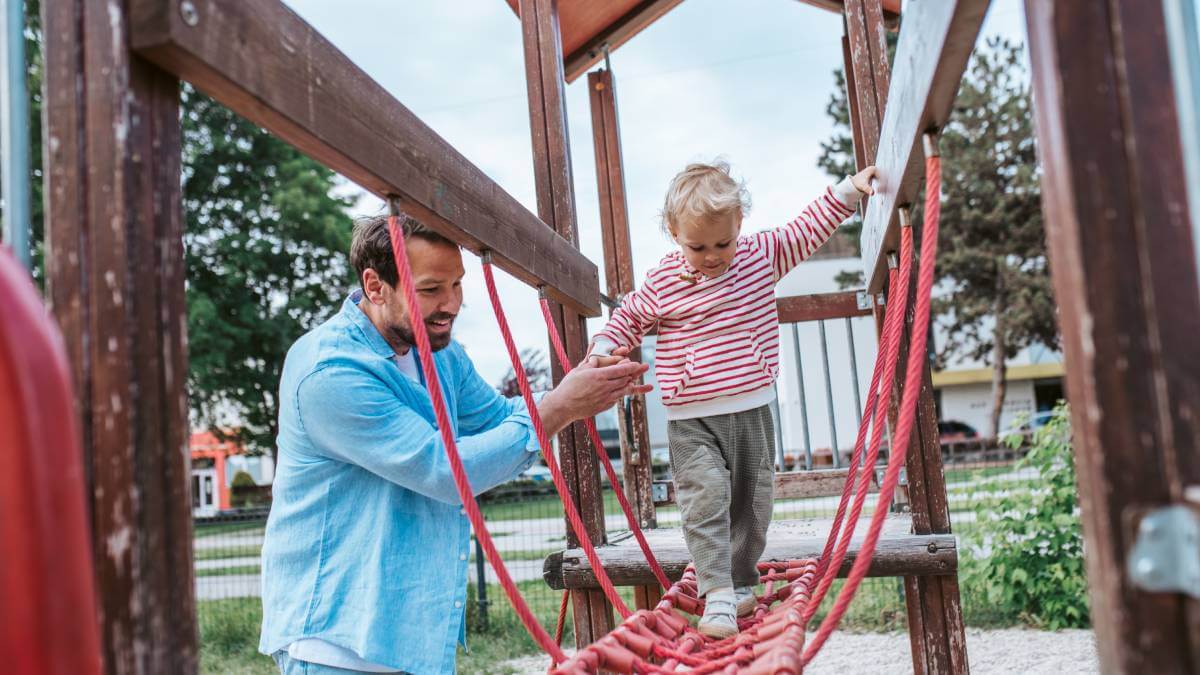
Outdoor Activities For 2 Year Olds
By two, many children are becoming much more confident in their movement.
Walking often develops into running, climbing becomes more interesting, and toddlers may want to complete everyday tasks independently.
The Department for Education highlights the importance of opportunities to practise movements such as walking, running, jumping, climbing, pushing and pulling.
Here are seven outdoor activities for 2-year-olds.
8. Jump In Puddles
With waterproof clothing and wellington boots, rainy days can become part of outdoor play. Children can step, stamp or jump into shallow puddles and notice how the water moves.
9. Make A Simple Obstacle Course
Create a short route using safe items such as cones, tunnels or low objects. Children might walk around a cone, crawl through a tunnel and throw a ball into a container. This can support balance, co-ordination and listening skills.
10. Collect Natural Treasures
Take a small basket outside and look for safe natural objects such as fallen leaves, sticks or pinecones. Talk about their colours, sizes and textures as you find them.
11. Kick A Ball
Use a large, lightweight ball and encourage your child to practise gentle kicks. This can help develop balance, leg control and co-ordination.
12. Draw With Outdoor Chalk
Large pavement chalk gives children space to create lines, circles and simple shapes. Holding and controlling chalk can support fine motor development. You can find more ideas in our guide to fine motor skill activities for children aged 1-5.
13. Dig In Soil Or Sand
Give children child-friendly tools and a suitable area of soil, sand or mud. They can scoop, fill and empty containers while learning simple ideas such as full, empty, heavy and light.
14. Pour And Transfer Water
Provide a small amount of water with safe cups and containers. Children can fill, pour, and transfer water while developing control and early mathematical language, such as “more”, “less”, and “full”.
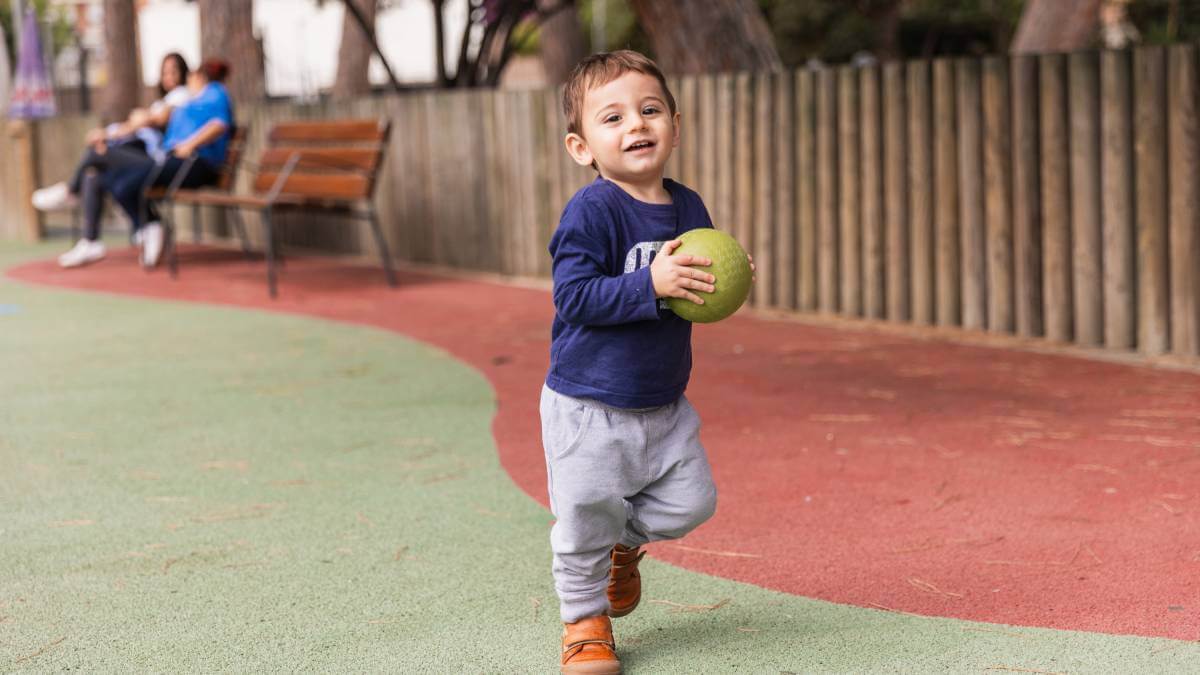
Outdoor Activities For 3 Year Olds
At three, children often have more control over their bodies and a growing ability to communicate their own ideas.
Many can follow short instructions, enjoy imaginative play and stay involved in activities for longer.
Here are seven outdoor activities for 3-year-olds.
15. Go On A Colour Hunt
Choose a colour and see how many matching things your child can find outdoors. You could search for green leaves, yellow flowers or red objects. The activity can also be adapted to shapes, numbers or sounds.
16. Create A Nature Scavenger Hunt
Make a short list of familiar things to spot, such as a leaf, a bird, a flower, or a stick. Children do not need to collect each item. Finding and pointing towards it is enough.
17. Help With Gardening
Children can scoop soil, plant seeds and help water them. Returning over time gives them the chance to notice how plants change and learn that living things need care.
18. Follow The Leader
Choose one person to lead and encourage everyone else to copy. Try marching, stretching, crouching or balancing, then let your child become the leader. This can support listening, movement and decision-making.
19. Make A Balancing Trail
Create a simple trail using chalk lines, cones or flat markers. Children can walk along the route at their own pace and practise stopping or balancing. Government guidance highlights core strength, balance and co-ordination as important parts of physical development.
20. Wash Outdoor Toys
Give children a sponge, a small amount of water and washable outdoor toys. They can scrub, rinse and dry the toys while practising a simple sequence of actions.
21. Have An Outdoor Picnic
A picnic can encourage conversation, role play and independence. Children can help set out items or create a pretend picnic with toy food. A simple blanket can quickly become a café, party or campsite.
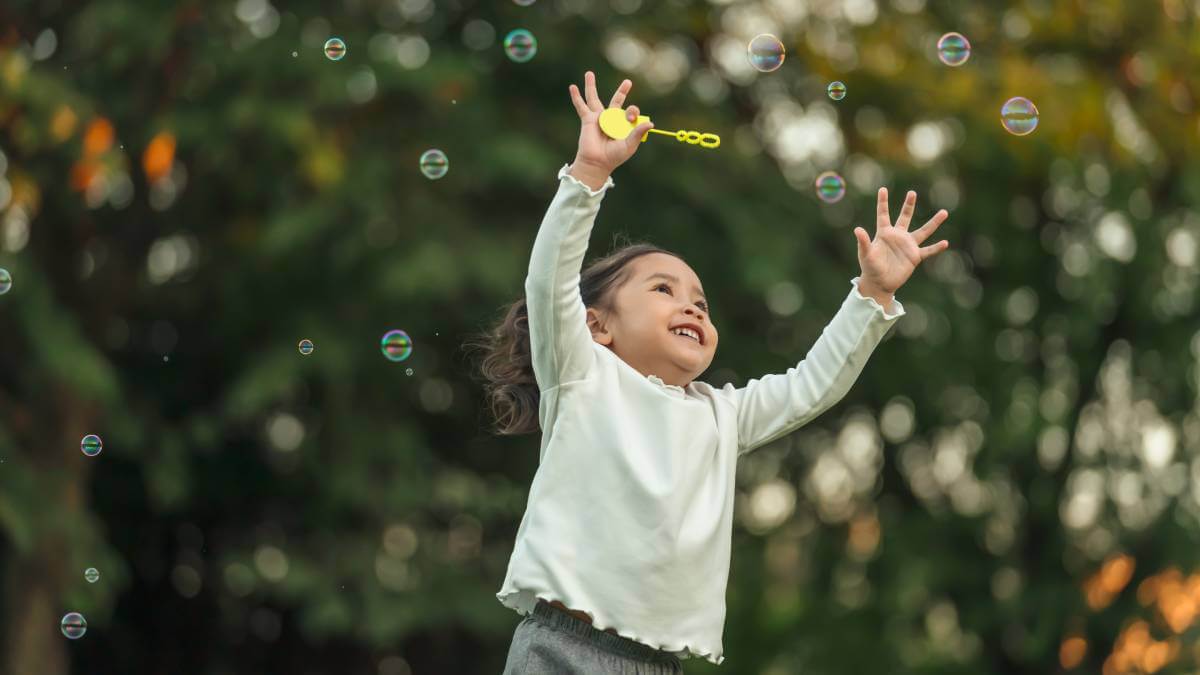
Outdoor Activities For 3-5 Year Olds
Between three and five, outdoor play can become more imaginative and collaborative.
Children may start creating their own rules, working together and solving simple problems through play.
Here are seven outdoor activities for 3-5-year-olds.
22. Go On A Bug Hunt
Explore a garden, park or woodland area and see what minibeasts you can spot. Ask simple questions about how they move, where they live or how many legs they have.
23. Build A Den
Use blankets, large cardboard boxes or suitable natural materials to create a simple den. Children can decide where the entrance should go and find solutions if something falls over. Den building can support creativity, teamwork and problem-solving.
24. Create Outdoor Art
Take creative activities outside. Children can draw trees, make rubbings from suitable textures or arrange fallen leaves into temporary pictures. Outdoor art gives children the freedom to create on a larger scale.
25. Play A Simple Game Of Hopscotch
Draw large squares with outdoor chalk. Children can step, jump or hop between them depending on their ability. Adding numbers can also support early counting and number recognition.
26. Sort And Count Natural Objects
Collect safe natural materials such as fallen leaves or larger stones. Children can sort them by size, colour or shape and count how many they have found. This introduces early maths through practical play.
27. Experiment With Shadows
On a sunny day, encourage children to find their shadow. Ask them to move their arms, jump or crouch and notice what happens. Older children may enjoy drawing around their shadow with chalk and checking it again later.
28. Create Mini Outdoor Games
Set up simple challenges such as throwing a ball towards a target, running to a marker or jumping over a chalk line. Older children can help invent new stages and decide what should happen next.
Making Outdoor Activities Part Of Everyday Life
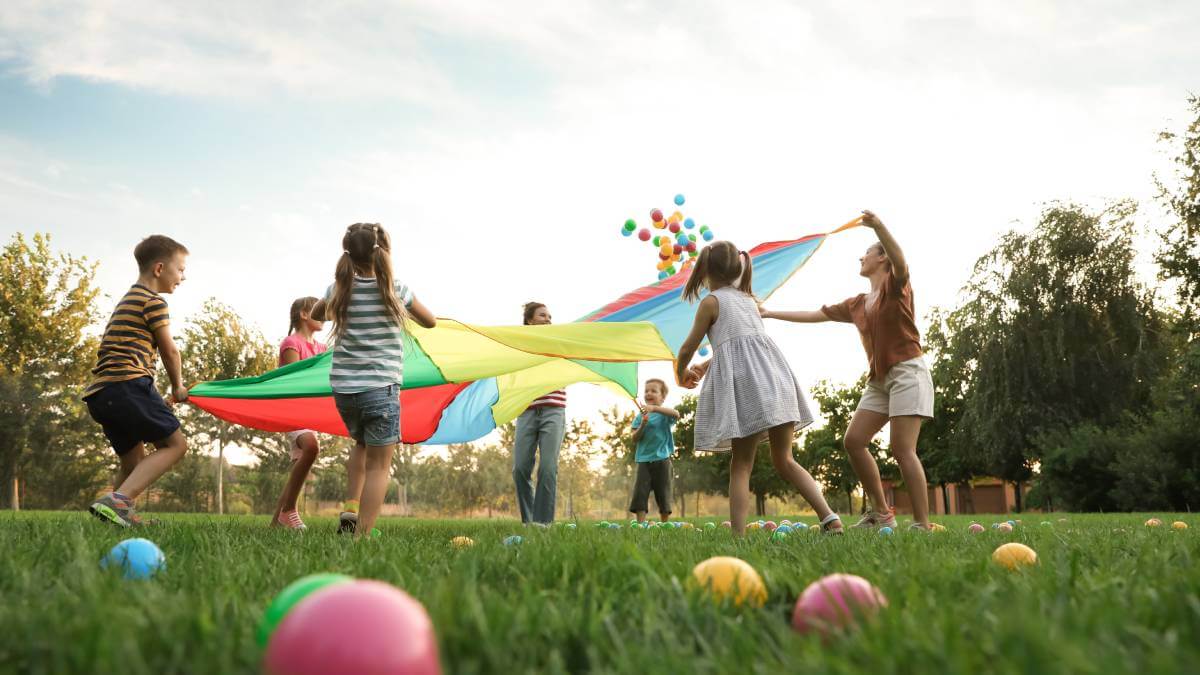
Outdoor activities do not need to be special events. Some of the best learning opportunities come from everyday experiences such as walking to the park, watering plants, watching the rain or playing with a ball.
The NHS physical activity guidelines for children under five recommend that children aged one to four spend at least three hours being physically active throughout the day. That does not mean parents need to plan three hours of organised exercise.
Movement can be spread throughout the day and may include walking, climbing, dancing, running, throwing, catching and active play.
It can also help to provide variety. One day may involve energetic movement, while another may focus on gardening, art, or exploring nature.
Following a child’s interests can often lead to longer periods of concentration and more meaningful play.
Outdoor Play At Flower Pots Day Nurseries
Outdoor play forms an important part of everyday life at Flower Pots Day Nurseries. We aim to give children opportunities to spend time outside in both the morning and afternoon, supporting physical development, fresh air and exploration. You can learn more about everyday nursery routines and common questions on our Flower Pots Day Nurseries FAQs page.
Our outdoor spaces are designed to give children opportunities to explore and develop at their own pace. Across our nursery settings, children can enjoy age-appropriate activities and resources that support both fine and gross motor development.
Families looking for nurseries in Hemel Hempstead or nurseries in St Albans can explore our local settings to find out more about the environments, facilities and care available.
Our “Why Choose Flower Pots Day Nurseries” page explains more about the environments, care, and experiences we aim to provide.
Some Flower Pots locations also offer dedicated outdoor features. For example, our Tring nursery includes a nature garden, a forest area, a mud kitchen, and a vegetable patch. We also have nurseries in St Albans, giving families another local option for nurturing early years care and outdoor learning.
By combining planned activities with child-led exploration, children can build important skills while enjoying the freedom of being outdoors.
Making Outdoor Play Part Of Growing Up
The best outdoor activities for toddlers are often simple, practical and enjoyable.
Rolling a ball, splashing in puddles, collecting leaves, drawing with chalk, gardening and searching for insects can all provide opportunities to move, communicate, explore and learn.
Outdoor activities for 1-year-olds may focus more on sensory exploration and early movement, while outdoor activities for 2-year-olds can introduce more running, climbing and independent play.
Outdoor activities for 3-year-olds may involve simple instructions, problem-solving, and imaginative play, while outdoor activities for 3-5-year-olds can encourage teamwork, creativity, and greater independence.
At Flower Pots Day Nurseries, we are committed to creating nurturing early years environments where children can explore both indoors and outdoors.
Through age-appropriate activities, carefully planned spaces and support from experienced educators, we help children build confidence, curiosity and skills at their own pace.
For families looking for a nursery where outdoor learning forms part of everyday life, explore our Flower Pots Day Nursery locations to find your nearest setting.